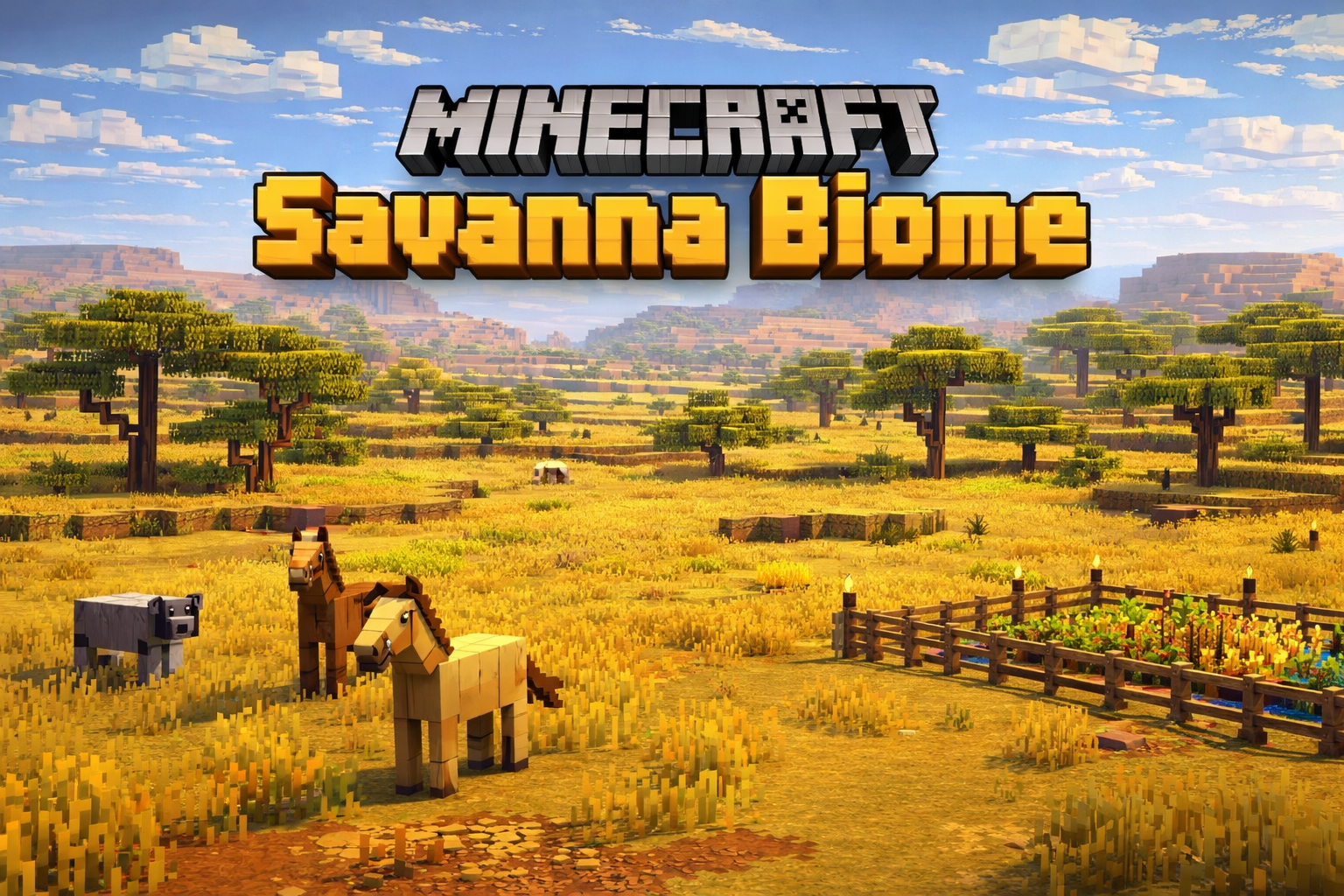
When players think of Minecraft Biomes, large green forests and flat plains usually come to mind. The Savanna biome stands out because it feels hotter, drier, and more open than most overworld environments. With its golden grass, acacia trees, and wide landscapes, the Savanna biome offers a very different survival experience.
Some players underestimate the Savanna biome because it looks simple at first glance. In reality, it is one of the most balanced and useful biomes for Survival, Building, and exploration when you understand how it works.
This guide explains what the Savanna biome is, what resources it offers, how to survive in it, and whether it’s a good place to build a base.
What Is the Savanna Biome in Minecraft?
The Savanna biome is an overworld biome characterized by dry grass, warm temperatures, and acacia trees. It generates in warm regions and often borders Deserts or Plains, making it easy to recognize while exploring.
Unlike forests or jungles, the Savanna biome has fewer trees and more open space. The terrain is usually flat with occasional hills or plateaus, especially in the Savanna Plateau variant.
Because of its open layout and predictable environment, many players consider the Savanna biome beginner-friendly despite its dry appearance.
Climate and Terrain of the Savanna Biome
The Savanna biome has a hot and dry climate, but unlike deserts, it still supports grass, animals, and farming. Rain can fall here, which makes crop growth possible without special setups.
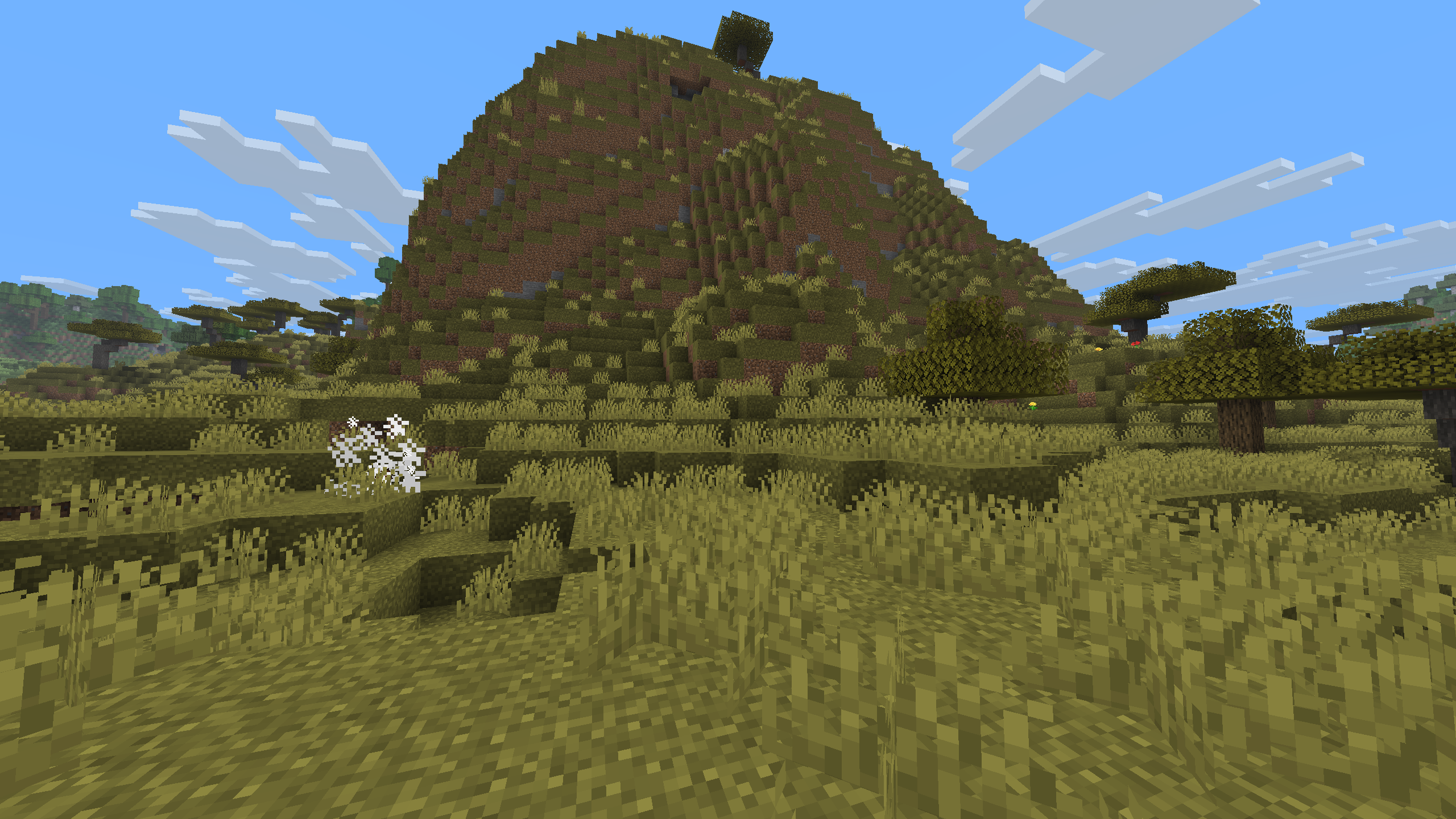
Terrain features include:
-
Wide open grasslands
-
Gentle hills and plateaus
-
Occasional lakes and rivers
-
Flat land ideal for building
The Savanna Plateau variant generates taller hills and cliffs, which can be dangerous to navigate but excellent for scenic bases.
Unique Trees and Plants in the Savanna
The most recognizable feature of the Savanna biome is the Acacia tree. Acacia trees grow with twisted trunks and flat canopies, making them easy to spot from a distance.
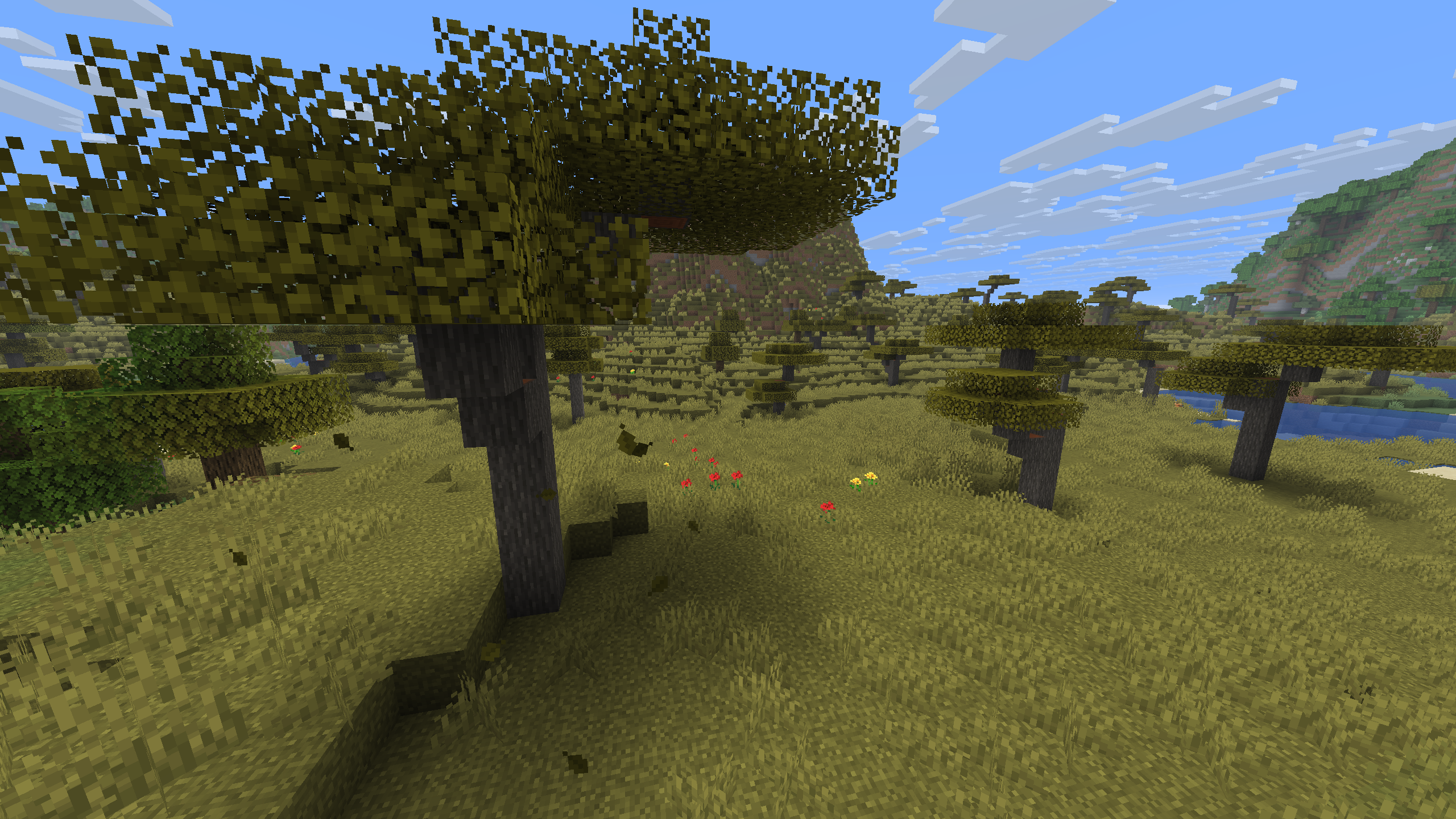
Acacia wood is useful for:
-
Building modern or desert-style structures
-
Crafting tools and storage
-
Adding contrast to darker wood types
Tall grass is common in the Savanna, making it easy to collect seeds for early farming.
Animals Found in the Savanna Biome
Despite its dry look, the Savanna biome supports many common passive mobs.

You can typically find:
-
Cows
-
Sheep
-
Pigs
-
Chickens
-
Horses
Horses are especially important, as the open terrain makes riding fast and efficient. This makes the Savanna biome excellent for early exploration.
Hostile mobs spawn at night like in most overworld biomes, but the open space gives you good visibility, making them easier to avoid or fight.
Resources Available in the Savanna Biome
The Savanna biome may not have rare blocks, but it offers reliable and useful resources.
Key resources include:
-
Acacia wood
-
Grass and dirt
-
Animals for food and leather
-
Easy access to surface caves
Because the terrain is open, mining entrances are easy to manage, making the Savanna a good location for long-term resource gathering.
Is the Savanna Biome Good for Survival?
Yes, the Savanna biome is very good for survival, especially for players who like open space and visibility.
Advantages
-
Easy mob visibility
-
Plenty of animals
-
Good farming conditions
-
Flat terrain for bases
Challenges
-
Fewer trees than forests
-
Some steep plateaus
-
Less natural shade
Overall, the Savanna biome offers a stable survival environment with fewer surprises than jungles or mountains.
Farming in the Savanna Biome
Farming works well in the Savanna biome because rain still falls here. Crops like wheat, carrots, potatoes, and beetroot grow normally.
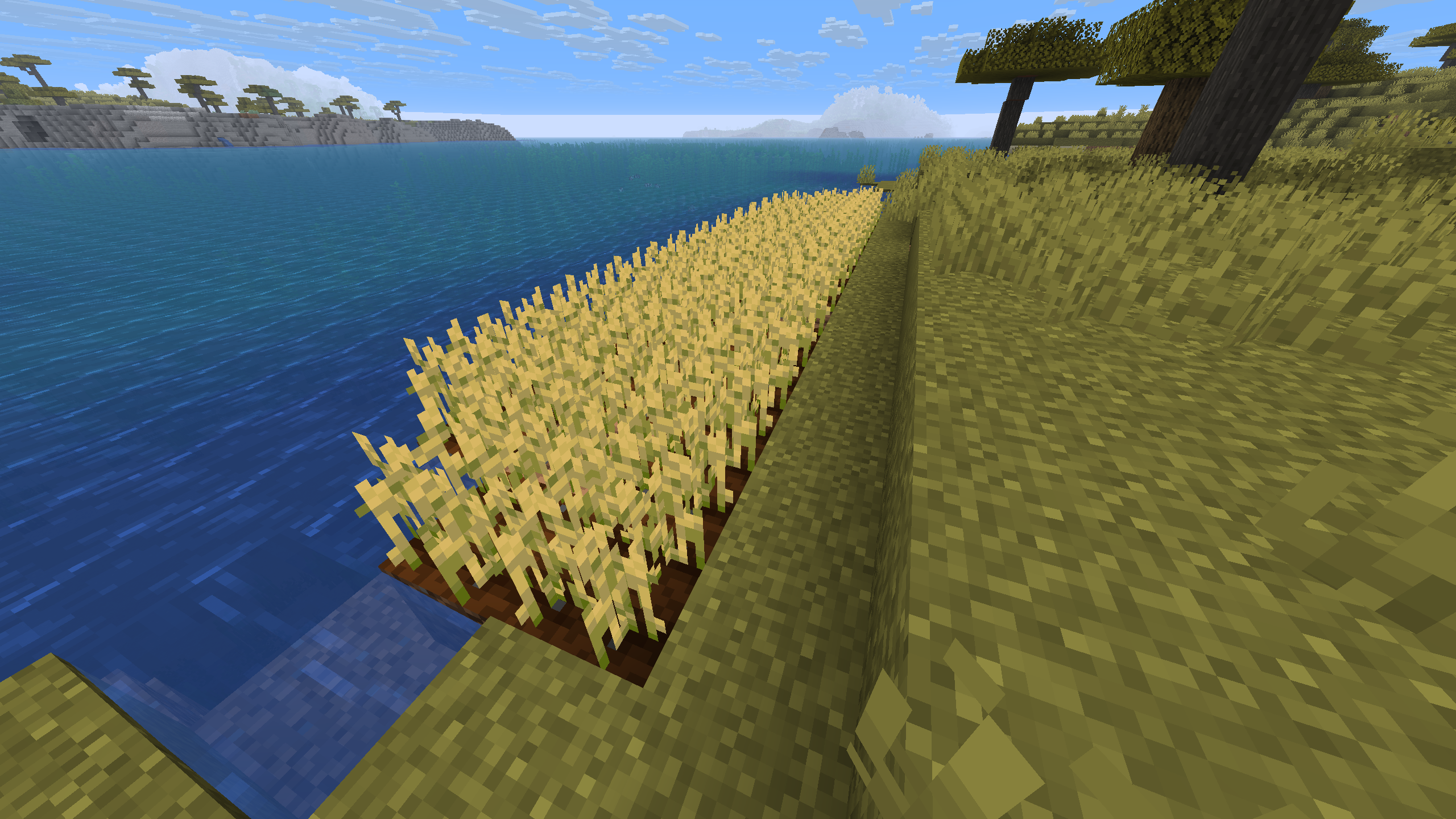
Tips for farming in Savanna:
-
Build farms near water sources
-
Fence crops to protect from animals
-
Use flat land for organized layouts
Animal farming is also easy due to the wide open areas, making breeding efficient and manageable.
Building in the Savanna Biome
The Savanna biome is an excellent place to build due to its flat terrain and unique color palette.
Popular building ideas include:
-
Acacia wood houses
-
Plateau bases
-
Desert-style villages
-
Modern open designs
The golden grass and warm lighting give builds a unique atmosphere that feels different from green biomes.
Savanna Villages
Savanna villages can generate naturally in this biome. These villages use acacia wood and orange terracotta, giving them a distinct look.
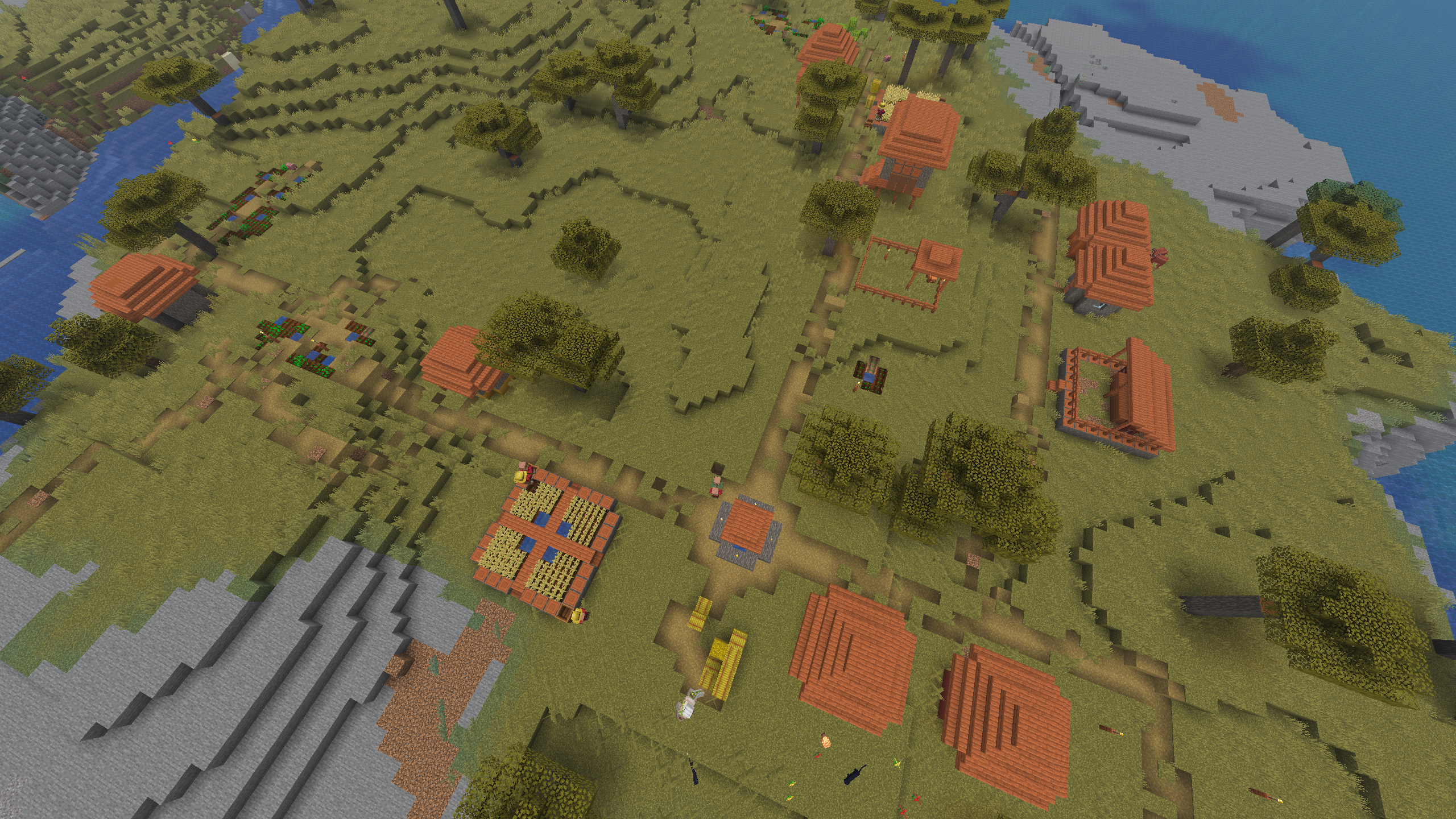
Savanna villages provide:
-
Early shelter
-
Food sources
-
Villagers for trading
Finding a Savanna village early can significantly speed up survival progress.
Survival Tips for the Savanna Biome
To survive comfortably in the Savanna biome:
-
Carry extra wood early
-
Use horses for fast travel
-
Light up open areas at night
-
Avoid plateau edges when exploring
Preparation makes the Savanna biome one of the safest long-term biomes in the game.
Is the Savanna Biome Worth Building In?
Absolutely. The Savanna biome is often overlooked, but it offers one of the best balances between safety, space, and aesthetics.
It works well as:
-
A starter base location
-
A farming hub
-
A long-term survival base
Players who enjoy clean layouts and open landscapes often prefer Savanna over forests or jungles.
Final Thoughts
The Savanna biome may not be the most dramatic biome in Minecraft, but it is one of the most practical. Its open terrain, reliable resources, and unique acacia trees make it an excellent choice for survival and building.
Whether you are starting a new world or searching for a peaceful base location, the Savanna biome is well worth considering.